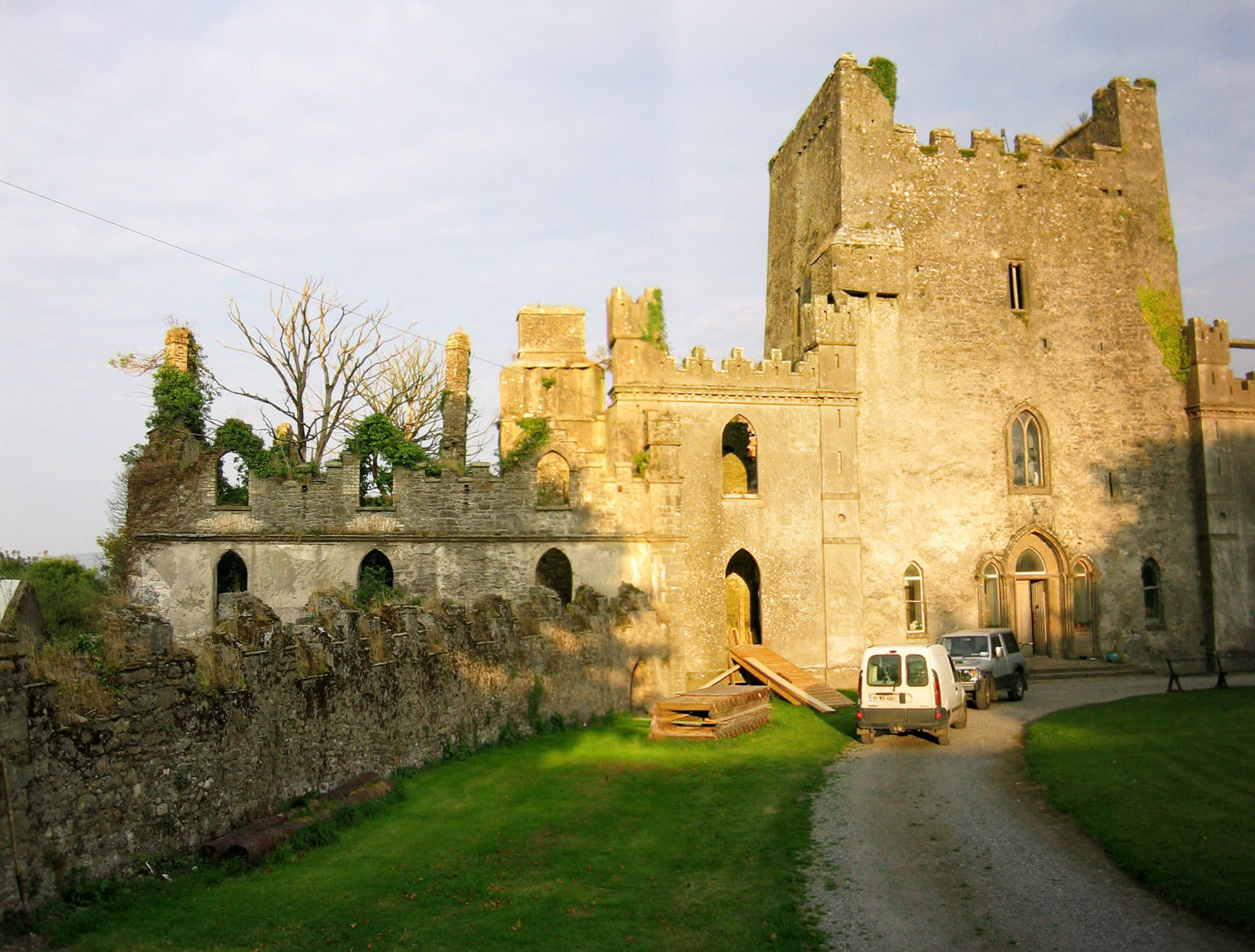
Leap Castle's “Elemental” is a story about a text as much as it is a story about a building. Modern accounts often present the entity as an established feature of the castle, but the trail leads back to Mildred Darby, a writer associated with Leap, and early twentieth-century occult publishing.
Mildred Darby and the published account
Secondary accounts attribute a description of a grey, human-shaped “Thing” to Mildred Darby and to The Occult Review around 1908 or 1909. [1][2] One planning document repeats a version of the story and refers to a 1909 article. [2] FI-X has not yet verified the original journal issue and will not treat later quotations as a substitute for the primary publication.
The provenance questions are important. What was the article's exact title? Was it presented as a first-hand account, fiction, occult testimony or editorial material? Was the name Leap used in the original text? Do later descriptions preserve the same wording or add the “Elemental” label after the fact? A digitised copy or library scan should settle those questions.
History and later branding
Leap Castle has a documented history independent of the haunting claims. The Darby family connection, the castle's destruction in 1922 and its later restoration provide a historical framework. The modern phrase “world's most haunted castle” is branding and should not be used as evidence. It may explain why later retellings repeat particular figures, rooms and stories.
FI-X assessment
The current classification is Disputed account. There is a traceable published-story lead, but the origin and meaning of the original article need to be checked. FI-X will update the case if the primary text is located, and will distinguish Darby's writing, later owners' accounts, tourism material and paranormal entertainment coverage.
What remains unresolved
Leap Castle is private property. FI-X does not publish access instructions or encourage trespass. FI-X has not independently verified every claim in this file. The classification will change only when better evidence supports a change.
Timeline
- Accounts attributed to Mildred Darby appeared in or around The Occult Review period. The original issue still requires direct verification. [1][2]
- The Darby era at Leap Castle ended amid destruction and looting during the Irish revolutionary period; modern summaries vary in detail. [3]
- Books, television and tourism increasingly presented Leap as one of Ireland's most haunted castles.
Sources and references
- [1] IAPSOP. The Occult Review archive materials. International Association for the Preservation of Spiritualist and Occult Periodicals, 1905-1939 index/archive. Primary-source search lead. Open source
- [2] Environmental Protection Agency. Leap Castle historical account in planning material. EPA public file, Archive PDF. Secondary historical source. Open source
- [3] Mildred Darby. The Hunger / author and castle context. Internet reference lead, Early twentieth century. Source-verification lead. Open source
Update history
- 3 August 2026 - Initial FI-X case study published; classification and source coverage marked for continued review.
Have information about this case?
FI-X welcomes documents, photographs, recordings, corrections and first-hand accounts. Submitting material does not guarantee publication, and FI-X may contact you to verify the information.